How to Apply a Jelly Mask at Home and How Often to Use It
Jelly masks provide professional-level hydration, soothing, and barrier support. Nevertheless, there are factors that affect their performance. Correct preparation, mixing technique, timing, and frequency of use are the key factors. Jelly masks rely on controlled powder-to-gel activation, which differentiates them from ready-to-apply products. The user also plays a direct role in how effectively the formula performs.
The masks of this type do not show better results if they are present in the skincare routine more often or are applied for a longer time. On the contrary, it may disrupt skin balance instead. Proper use supports hydration retention, comfort, and visible smoothness, and the barrier is not overestressed. Luminous Skin Lab Jelly Masks are based on controlled gelation formulas and proprietary Poly-Luronic™ (PGA + HA) technology. This approach allows predictable texture formation and reliable home application when instructions are followed carefully.
What Should You Do Before Applying a Jelly Mask?
Skin preparation determines how well a jelly mask adheres and how effectively hydration and actives remain in contact with the skin.
Clean skin is the main requirement. Residual makeup, SPF, excess oil, or skincare film hinder proper contact between the skin surface and the mask. These substances reduce occlusion and interfere with hydration retention.
All surface residue must be removed. Use a gentle cleanser suited to the specific skin type. If long-wear makeup or SPF is present, double cleansing may be appropriate. Skin should feel clean, but tightness is unacceptable.
Jelly masks form a semi-occlusive layer that helps reduce transepidermal water loss (TEWL). The gel layer cannot conform evenly if the surface is coated with debris. Its remainder leads to lifting, uneven peel-off, and reduced visible benefits.
The Green Tea Matcha Jelly Mask serves as a useful example. This calming, antioxidant-rich formula with matcha, green tea, and tea tree performs best when applied to properly cleansed skin. The mask refines pores, which require absolute purity after skin preparation. Its soothing properties also act evenly across the cleansed surface.
What to do before putting on a mask?
Cleanse the skin thoroughly, remove makeup and SPF, then pat the skin dry. Avoid applying heavy creams beforehand. Lightweight serums are acceptable if they are part of the routine.
What does a jelly mask do for your face?
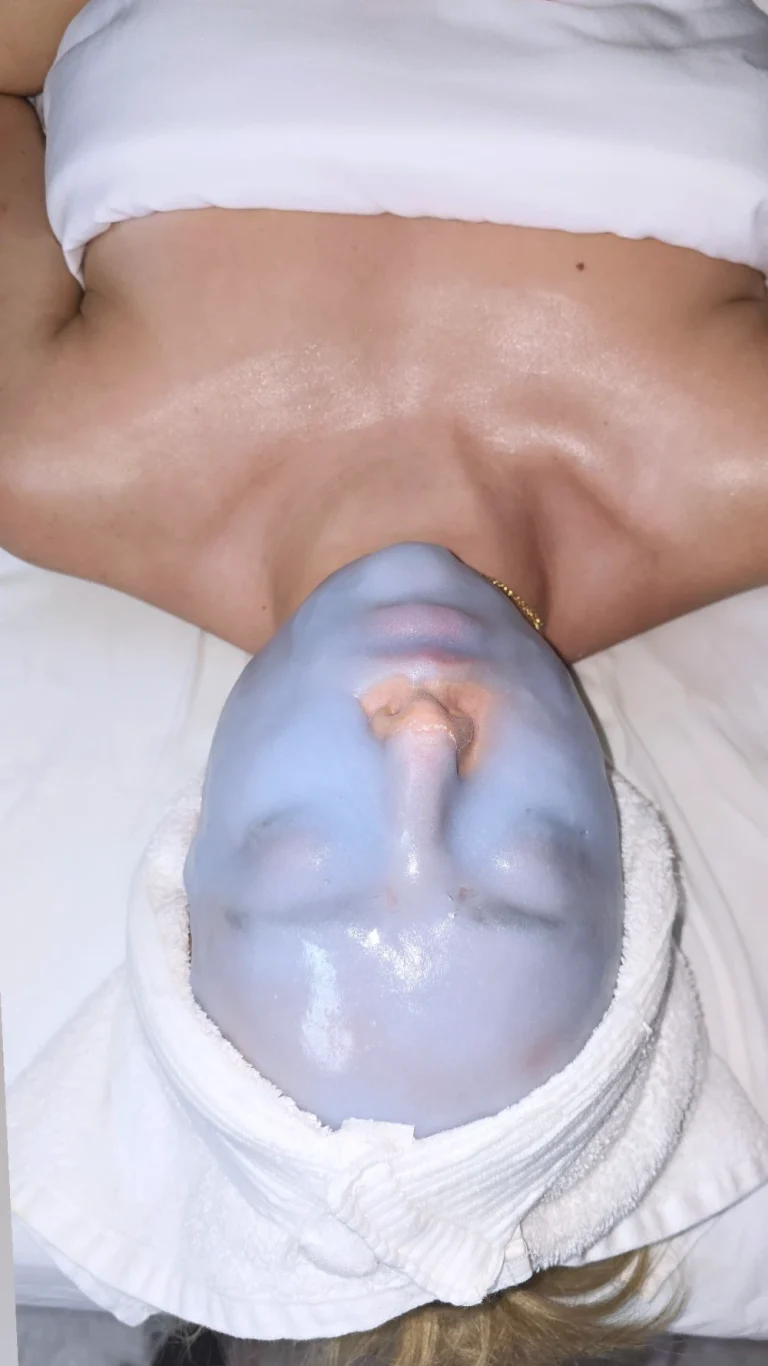
Jelly masks function as semi-occlusive hydrogel systems that reduce TEWL, increase stratum corneum hydration, and enhance the penetration of pre-applied actives. They form a cooling, flexible gel layer that supports hydration retention, calms the skin, and helps maintain barrier comfort by limiting moisture evaporation.
Formulations such as the Skin Nourishing Ceramide Jelly Mask illustrate this mechanism by supporting barrier integrity and helping the skin retain water more effectively. Hydration-focused options like the Fountain of Youth Jelly Mask further promote moisture stability and visible plumpness, which contributes to a smoother skin appearance after application.
How Do You Mix and Apply A Jelly Mask?
Keeping to the jelly mask application instructions is essential. It ensures predictable gel formation and hydration performance when ratios and technique remain consistent. Follow these steps to support proper activation and application:
- Prepare your workspace and tools. To prepare a jelly mask, you will need a disinfected bowl for mixing the components. Also, use a non-metal spatula. Prepare the powder and purified water. Do not forget to set a timer.
- Measure the required amount of powder. One treatment portion should be used for the application. Keep in mind that ratio precision influences the level of gel formation.
- Add purified water gradually. Pour it slowly to prevent clumping. This approach allows the powder to hydrate evenly.
- Mix everything thoroughly. Do this quickly and continuously. Remember that the mixture begins to set immediately after hydration. Make sure the mask reaches the correct texture. It should not be too runny or grainy. Only a viscous and uniform mask will spread well across the skin.
- Apply the mask immediately in an even layer. Ensure that the thickness remains consistent. Thin edges should be avoided because they may tear.
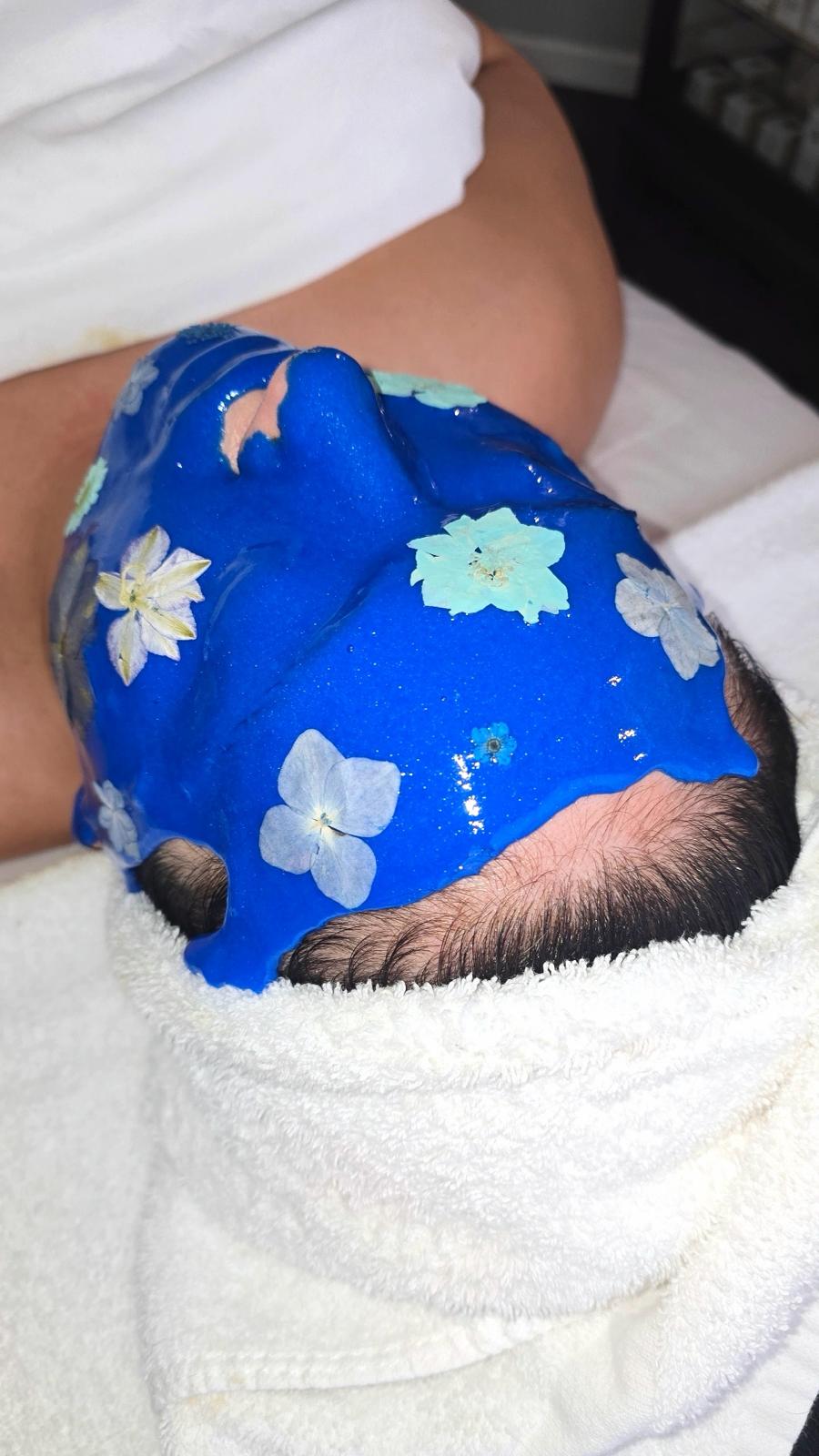
- Allow the mask to set fully. It should form a flexible peel-off layer.
How do you know when a jelly mask is mixed correctly?
Consistency is the primary sign of proper mixing. A jelly mask forms a smooth, lump-free, glossy gel with medium viscosity when an esthetician prepares it correctly. In this state, it holds its shape without running. The mixture ribbons off the spatula in a continuous flow; it does not drip or form stiff peaks.
The gel should spread easily while maintaining its structure on the skin. This reflects proper hydrocolloid hydration and polymer activation. Any Luminous Skin Lab product illustrates this behavior well, as its formulation supports predictable gelation and even application when the recommended ratio is followed.
Why does a jelly mask appear too thick or too runny?
The mask becomes too thick if there is not enough water or if the powder is added too quickly. It is possible to avoid extra thickness by adding water in small portions and mixing quickly. Excess water makes the mask too runny. If it happens, it is necessary to decrease the amount of water next time.
Does room temperature affect jelly mask setting time?
Yes. Hydrocolloid gelation is sensitive to temperature changes. Warmer room or water temperatures make polymer swelling and setting faster, and working time becomes shorter. Cooler environments slow cross-linking. Gel time extends, but the risk of incomplete structure appears. Use room-temperature water and mix the mask in a climate-stable treatment room.
What Common Mistakes Estheticians Make When They Apply a Jelly Mask?
Jelly masks are sensitive to the preparation flow. Their performance depends not just on the formula itself. Precision, timing, and skin preparation that a professional provides are more considerable factors.
| Common Mistake | What Happens | Why It Matters |
| Incorrect Proportions | The powder-to-water ratio directly defines polymer hydration and gel structure. Dense mass, poor spreadability, and a compromised occlusive effect are the result if there is too little water. The mask may be set before full application. Too much water makes the gel network too weak. It slips on the surface, sets unevenly, and its semi-occlusion is less effective. | Proper proportions ensure stable gel formation, predictable setting, and effective hydration retention. |
| Delayed Application After Mixing | Jelly masks begin polymer activation immediately after contact with water. Premature viscosity increases after too long a pause before application. The gel loses flow and cannot lie on the skin evenly. This results in air gaps and flawed occlusion. The penetration effect is worse as well. | Immediate application supports even coverage, proper occlusion, and better hydration performance. |
| Uneven Layer Thickness | A uniform medium layer helps maintain stable hydration levels. In this case, temperature modulation is consistent, and it is possible to predict positive treatment outcomes. Too thin a layer is a reason for rapid dehydration, a reduced water-reservoir effect, and weak barrier support. Too thick an application in isolated areas raises the risk of inconsistent cooling and uneven pressure. | Balanced thickness improves treatment predictability, comfort, and hydration outcomes. |
| Poor Skin Preparation | Jelly masks amplify what is already on the skin: residual oil, makeup, and debris. | Proper skin preparation ensures the mask works as a treatment accelerator, not just a hydrating finish. |
Most jelly mask failures are procedural and do not depend on the formula. Precision in every step of application lets the mask work as a professional delivery system. A lack of it turns a professional product into a mere cosmetic overlay.
The Radiance RX Jelly Mask illustrates how even application and correct timing produce smooth, single-piece removal and a uniform tone-refining appearance. It brightens the skin, fades discoloration, and protects against oxidative damage after correct mixing.
Why does a jelly mask crack or tear when removed?
Cracking or tearing usually means there is a structural imbalance in the gel matrix. It may result from an overly thin application or an incorrect powder-to-water proportion. Premature removal is also a cause; cracks appear when polymers have not fully set. Dehydration caused by low room humidity or extended wear time can also reduce elasticity. In this case, cohesion becomes weaker, and the mask peels off in fragments.
Why does a jelly mask peel off unevenly sometimes?
Thin edges dry faster and tear. Cohesive mask removal is possible only when thickness is consistent.
What happens after late jelly mask application after mixing?
The gel starts to set in the bowl. It acquires a lumpy texture and adheres more weakly to the skin.
How Long Do You Keep a Jelly Face Mask On?
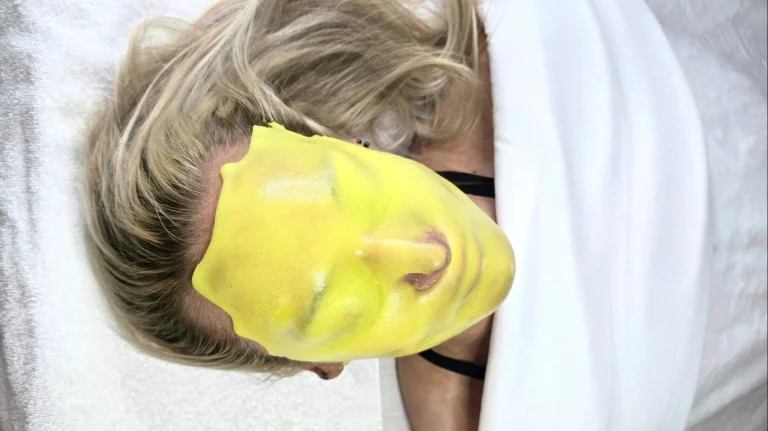
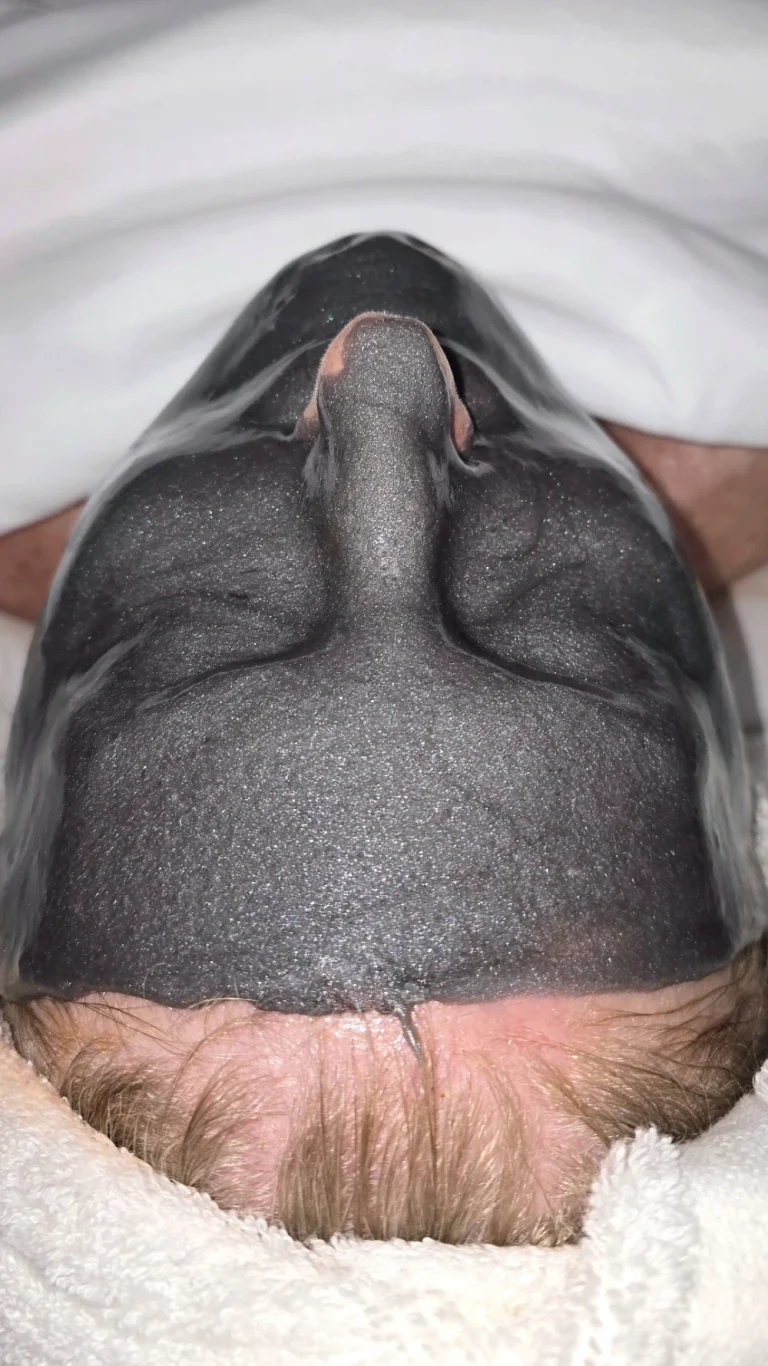
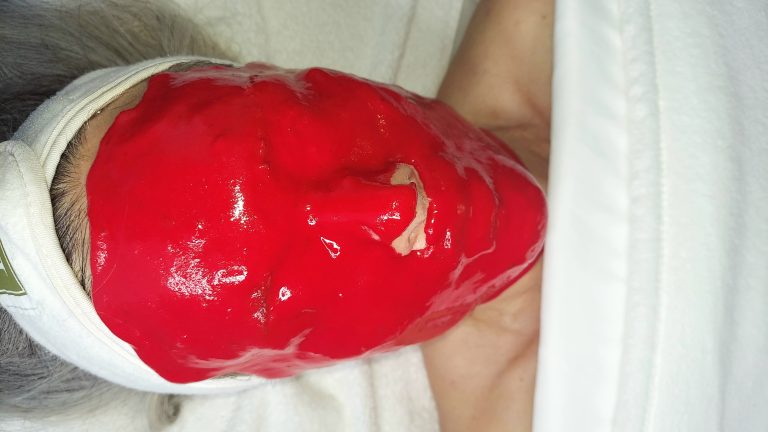
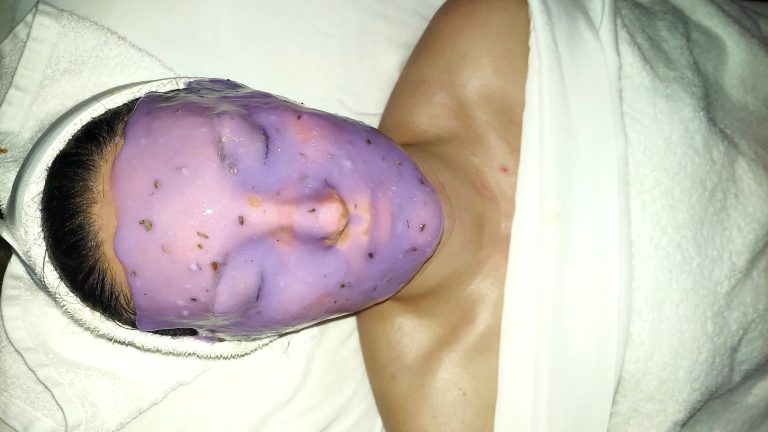
Estheticians usually leave jelly masks on for 15–20 minutes. Once the mask forms a flexible, rubber-like sheet, it is ready to be removed.
Keeping the mask on longer does not improve hydration. The occlusive phase is complete once the mask has fully set. If it remains on the skin for too long, the edges may stiffen, and removal may cause discomfort.
Formulations with predictable gelation make it easier to recognize the appropriate removal window. The Fountain of Youth Jelly Mask demonstrates reliable peel-off timing once fully set, providing comfort, a smooth finish, and improved skin appearance.
Do you wash off a jelly mask?
No. Estheticians peel it off in one piece once the mask has fully set. The peel-off method helps minimize friction and preserves the semi-occlusive benefits created during application. Professional formulas from the Luminous Skin Lab Jelly Masks collection are designed to form a cohesive layer that lifts cleanly from the skin, leaving little to no residue and helping maintain post-treatment comfort.
How to remove a jelly face mask?
Gently loosen the edges of the mask. Start from the jawline or the hairline. It is important to preserve the integrity of the layer, so the mask should be removed in one smooth upward motion without pulling. The direction of removal is not critical. When well-structured alginate formulas are used, this process does not create difficulty. For example, whichever product from the Luminous Skin Lab collection you choose, it forms a flexible sheet that removes easily while maintaining hydration and supporting barrier comfort.
Signs of Overuse and Optimal Use of a Jelly Mask
Sufficient frequency of jelly mask use provides hydration support and barrier recovery. Skin feels comfortable, hydrated, and balanced, and no tightness or increased sensitivity is perceived when proper intervals between applications are observed. Texture also appears smoother in this case.
The key signs of overuse are:
- temporary sensitivity;
- increased redness;
- surface tightness;
- skin feeling “overworked.”
Extend the intervals if any of these manifest.
Even hydrating masks create occlusion. Daily occlusion without rest can interfere with the natural barrier rhythm.
For instance, the Skin Nourishing Ceramide Jelly Mask is a barrier-focused formula that helps reduce TEWL, improve texture, and balance skin hydration levels — but only when it is not overused. Even barrier-supportive masks require recovery intervals.
How often should you use a jelly mask?
The frequency of jelly mask use depends on the skin’s needs. It is also important to consider the condition of the skin barrier. As a rule, applying a mask 1–3 times per week is sufficient. When dehydrated skin is involved or when recovery after procedures is required, slightly more frequent use may be beneficial, but only for a limited period. Balanced skin typically maintains results with moderate application intervals. Remember the key principle of consistency. It is more important than frequency. The skin responds better to predictable hydration than to excessive occlusion.
Can you use a jelly mask every day?
In general, there is no need to use jelly masks every day. Structured intervals between applications are far more beneficial for the skin. This helps avoid overloading the skin, while natural barrier processes continue to function without interruption. Regular use with balanced intervals supports comfort and hydration stability. This positively influences overall skin elasticity.
Take, for example, the Skin Nourishing Ceramide Jelly Mask, which supports the skin barrier. It is most effective when the skin has adequate time to recover between applications.
Conclusion: What Ensures Reliable Jelly Mask Performance
Correct technique determines jelly mask performance more than frequency. Proper cleansing ensures adhesion, accurate mixing ensures correct gelation, timely removal maintains comfort, and moderate use supports barrier stability.
The benefits of jelly masks decrease, and application may lead to temporary imbalance in cases of overuse or improper preparation. Luminous Skin Lab Jelly Masks are formulated with controlled alginate activation and Poly-Luronic™ technology. This provides predictable gel formation and consistent results at home when instructions are followed carefully. Structured preparation, decisive mixing, correct timing, and balanced frequency create a routine that supports hydration, comfort, and visible smoothness without overstressing the skin.
FAQ
The key difference of a jelly mask is the occlusive, peel-off gel layer it forms after activation. It does not absorb into the skin like cream masks or rely on evaporation like sheet products. A jelly mask creates a temporary seal that limits transepidermal water loss (TEWL). This structure helps retain both intrinsic skin moisture and hydration delivered by underlying serums. The cooling and calming effect during treatment is another distinguishing feature.
Jelly masks can be used on most skin types when selected according to skin condition and treatment goals. Dehydrated, sensitive, post-procedure, mature, and barrier-compromised skin often benefits most from their occlusive hydration and soothing properties. Jelly masks also suit acne-prone skin; professional formulations hydrate without heavy emollients or occlusive oils that could contribute to congestion.
Yes. The use of jelly masks after professional treatments is justified. Application may serve as a final stage following exfoliation, extractions, chemical peels, microneedling, or device-based procedures. They provide a cooling effect and support hydration retention. Occlusive structures help calm the skin, reduce erythema, and support barrier recovery without overstimulation.
Yes. Estheticians usually apply jelly masks over serums or ampoules as a finishing or mid-treatment step. The occlusive gel layer maintains hydration and prolongs contact between active ingredients and the skin. Combining serums with jelly masks helps improve hydration retention and treatment efficiency while preserving barrier integrity. For example, the Comprehensive Aftercare Jelly Mask is often used after intensive treatments, as its occlusive structure helps seal in calming or barrier-supportive serums while enhancing post-procedure comfort.
Professional jelly masks are peeled off. The mask creates a single flexible layer once fully set; it does not require rinsing or wiping. The peel-off method minimizes friction, reduces skin contact, and helps maintain treatment flow. This is also beneficial for sensitive or post-procedure skin.
Estheticians activate powder-based jelly masks immediately before application. This method preserves ingredient stability and ensures freshness. It also gives professionals control over texture, thickness, and setting time. Pre-mixed formulas prioritize shelf stability, whereas powder-activated masks focus on performance consistency, hygiene, and predictable results in professional settings.